
Renting in Japan: Hidden Fees & How to Avoid Them

The Truth About Japan Rental Hidden Fees (And How to Keep More Money in Your Pocket)
Moving to Japan is exciting — but the first time you see a rental breakdown, your excitement might turn to confusion. Japan rental hidden fees can easily double or even triple your first month's costs, leaving many foreigners blindsided before they've even unpacked a box. This guide breaks down every charge you're likely to encounter when renting in Fukuoka, what's negotiable, and how to avoid paying more than you should.

The Notorious Key Money (Reikin) Explained
Reikin (礼金) literally means "thank-you money." It's a non-refundable gift paid directly to the landlord, simply for agreeing to rent you their property. There is no service attached to it. You will never see it again.
Historically, reikin dates back to post-WWII Japan when housing was so scarce that tenants would pay landlords out of sheer gratitude. Decades later, it stubbornly remains in many contracts — though it's becoming less common, especially in major cities like Fukuoka.
Reikin is typically charged as a multiple of your monthly rent:
- 1–2 months' rent is the standard range
- On a ¥70,000/month apartment, that's ¥70,000–¥140,000 gone immediately
- Some landlords charge zero reikin (rei-rei contracts) — these are worth seeking out
Pro Tip: When searching on sites like Suumo or CHINTAI, filter for 礼金0 (zero key money) properties. In Fukuoka's competitive rental market, many landlords — especially for newer buildings — have dropped reikin entirely to attract tenants.
Security Deposit (Shikikin) & Getting It Back
Shikikin (敷金) is a refundable security deposit, typically 1–2 months' rent. In theory, you get it back when you move out, minus any costs for damage you caused.
In practice, deductions can be aggressive. Japan has a concept called genjo kaifuku (原状回復) — restoring the apartment to its original condition. The question is: who pays for what?
The Ministry of Land, Infrastructure, Transport and Tourism (MLIT) publishes guidelines that clarify this:
- Landlord's responsibility: Normal wear and tear (small scuffs, faded walls from sunlight, aging equipment)
- Tenant's responsibility: Stains, holes, damage caused by negligence or accidents
- Often disputed: Yellowed walls from smoking, mold caused by poor ventilation, pet damage
To protect your deposit, take timestamped photos and videos of every room on move-in day — including pre-existing scratches, stains, and any damage. Share them with your landlord or agency in writing. This single habit can save you tens of thousands of yen.
"In Japan, the apartment you move into is rarely the most expensive part — it's all the fees wrapped around it that catch people off guard."
Agency Fees, Guarantor Fees & Insurance
Beyond reikin and shikikin, several other charges appear on almost every Japanese rental contract. Understanding each one helps you ask the right questions before you sign.
Agency Fee (Chūkai Tesūryō)
This is paid to the real estate agency that found you the apartment. By law, it's capped at one month's rent plus tax. Some agencies charge half a month; a growing number of online-first agencies charge nothing at all. It's worth shopping around.
Guarantor Fee (Hoshōgaisha Ryō)
Most landlords in Japan require a guarantor — someone who will cover your rent if you can't pay. For foreigners without Japanese family or colleagues, this almost always means a professional guarantee company (hoshō gaisha).
Expect to pay:
- Initial fee: 30–100% of one month's rent
- Annual renewal fee: ¥10,000–¥20,000 per year
Fire Insurance (Kasai Hoken)
Mandatory in virtually all Japanese rentals. Your landlord or agency will often suggest a specific policy — but you are generally not required to use it. Shopping independently (try Kyoeikasai or Nihon Kyōsai) can reduce your premium significantly, often to ¥1,500–¥2,500/month for standard renter's coverage.
Key Replacement Fee (Kagi Koukan)
Many contracts include a ¥15,000–¥30,000 upfront fee to replace the locks. This is sometimes mandatory, sometimes negotiable — always ask.

Monthly Costs Beyond Rent in Fukuoka
Once you've survived the upfront fees, monthly life in Fukuoka is genuinely affordable — but your actual monthly outgoing will be higher than the advertised rent figure. Here's what to budget for:
- 管理費 (Kanrihi / Management fee): ¥3,000–¥10,000/month, covers building maintenance and common areas
- 駐輪場 (Bicycle parking): ¥500–¥2,000/month if you need it
- Internet: ¥4,000–¥5,500/month for a dedicated line (though many buildings now include it)
- Utilities (electricity, gas, water): Typically ¥8,000–¥15,000/month combined, depending on season and usage
- NHK fee: ¥1,950/month if you have a TV (or certain smart TVs)
In Fukuoka specifically, rent levels are notably lower than Tokyo or Osaka. A clean 1K apartment in Hakata or Chuo-ku runs ¥55,000–¥80,000/month, while similar apartments in Tokyo's central wards can easily exceed ¥130,000. That price advantage makes Fukuoka one of the most liveable cities in Japan for foreigners on a budget.
Good to Know: Fukuoka City runs a foreign resident support center (Fukuoka City International Foundation) at Tenjin, offering free housing consultation in English, Chinese, Korean, and other languages. Their staff can review your contract and flag anything unusual before you sign.
How to Negotiate Japan Rental Fees (Yes, You Can)
Many foreigners assume Japanese rental contracts are set in stone. They're not. Negotiation is less common than in Western countries, but it absolutely happens — especially in Fukuoka's renter-friendly market.
What's Most Negotiable
- Reikin: Ask for reduction to 0 or 1 month. Vacancy costs landlords money; many will compromise.
- Agency fee: Some agencies will halve this if you're a serious, ready-to-sign tenant.
- Free rent period: For apartments that have been vacant a while, a 1–2 week free period is sometimes possible.
- Key replacement fee: This is often added arbitrarily — push back and it may disappear.
How to Negotiate Effectively
- Be polite and frame requests as questions, not demands: "Is there any flexibility on the reikin?"
- Show you're a serious tenant — have your documents ready (residence card, employment certificate or proof of income)
- Time it right: landlords are most flexible at the end of the month or end of moving season (April and September are peak; July–August and November are slow)
- Use a bilingual agent or someone familiar with Japanese rental customs if your Japanese is limited

The Furnished Apartment & Sharehouse Alternative in Fukuoka
If reading the above has made you dizzy, there's a simpler path — especially for your first months in Japan.
Furnished apartments and sharehouses like those offered by Sumizy in Fukuoka bypass most of the fee structure entirely. Here's how the comparison typically looks:
- ✅ No reikin (key money) — you're not paying a "thank-you gift" to anyone
- ✅ No or minimal shikikin — deposits are much lower or waived
- ✅ No agency fee — you rent directly
- ✅ Furniture and appliances included — no need to buy a washing machine, fridge, or bed on arrival
- ✅ Utilities often included — one simple monthly payment
- ✅ Flexible contracts — month-to-month options suit those still figuring out their plans
For someone arriving in Fukuoka for work, study, or a working holiday, starting in a sharehouse or furnished apartment means you can be living comfortably within days — not weeks — and without draining your savings before you've earned your first paycheck in Japan.
The trade-off is a slightly higher monthly rate compared to an unfurnished apartment. But when you factor in the ¥300,000–¥500,000 you'd spend on upfront fees plus furniture for a standard rental, the furnished option is often cheaper in the first six to twelve months.
Final Thoughts: Know the Fees Before You Sign
Japan's rental system has quirks that exist nowhere else in the world — but once you understand them, they're manageable. The key is never signing anything without knowing exactly what every line item means and whether it's negotiable.
If you're moving to Fukuoka and want to skip the upfront fee maze entirely while you get settled, Sumizy's furnished apartments and sharehouses offer transparent, foreigner-friendly pricing with no hidden surprises. It's a smart way to land softly, explore your options, and transition into long-term renting on your own terms when you're ready.

Sumizy
Related Articles
 Moving Guide
Fukuoka Share House Guide: How Renting a Room Works and What to Ask
A practical look at share houses in Fukuoka: what a room usually includes, which fees to ask about, how contracts and guarantors work, and how to pick an area before you send an inquiry.
 SumizyRead more →
 Moving Guide
How to Rent a Furnished Apartment in Fukuoka: Step-by-Step (2026)
A step-by-step guide to renting a furnished apartment in Fukuoka as a foreigner in 2026 — documents, costs, neighborhoods, and key mistakes to avoid.
SumizyRead more → Moving Guide
What Is a Weekly Mansion in Fukuoka? Prices, Contracts & Perks
Wondering what a weekly mansion in Fukuoka actually is? Get real prices, contract details, and tips to book the right short-stay apartment in Hakata.
SumizyRead more →Featured properties
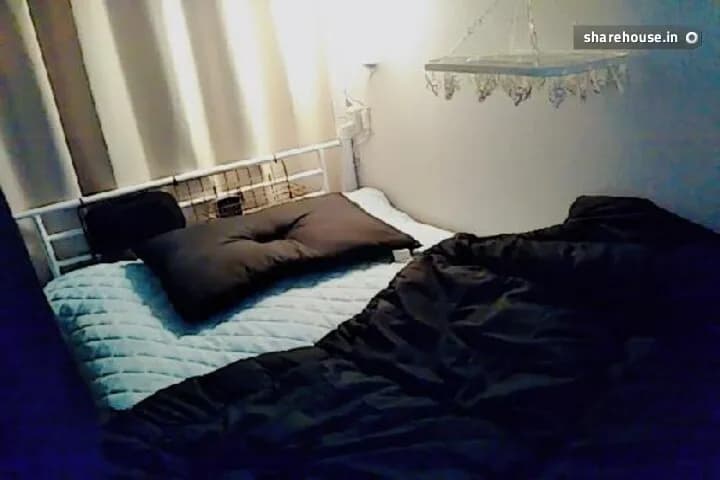
TSUBASA FROUT vol.24 ITOSHIMA PREMIUM CLUB
TSUBASA FROUT vol.24 ITOSHIMA PREMIUM CLUB #301E
Sharehouse room · Tenjin
1 bedroom · 13 m²
Tenjin · min 1 month
¥13,580 / month
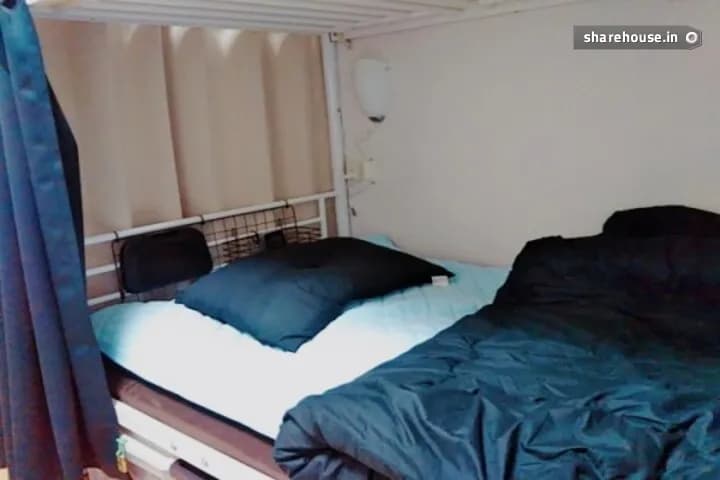
TSUBASA FROUT vol.24 ITOSHIMA PREMIUM CLUB
TSUBASA FROUT vol.24 ITOSHIMA PREMIUM CLUB #301D
Sharehouse room · Tenjin
1 bedroom · 13 m²
Tenjin · min 1 month
¥13,580 / month
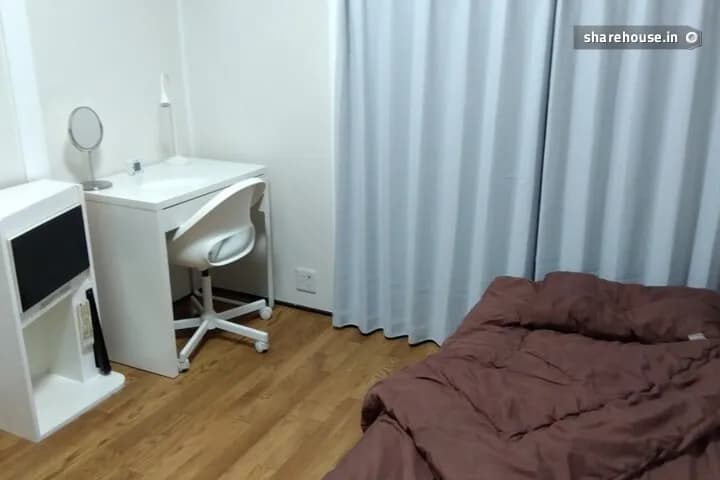
TSUBASA FROUT vol.24 ITOSHIMA PREMIUM CLUB
TSUBASA FROUT vol.24 ITOSHIMA PREMIUM CLUB #202
Sharehouse room · Tenjin
1 bedroom · 14 m²
Tenjin · min 1 month
¥23,580 / month